What is Gauge and Why Does it Matter?
Gauge is a measure of how many stitches and rows fit into a specific measurement—usually a 4×4 inch (10×10 cm) square. It tells you exactly how tightly or loosely you are crocheting compared to the original designer.
If you are making a blanket or a scarf, gauge isn’t incredibly important. If it turns out an inch bigger or smaller, it’s still a blanket! However, if you are making a fitted sweater, a hat, or amigurumi, gauge is critical. If your gauge is wrong, your sweater might end up fitting a toddler instead of an adult!
How to Check Your Gauge
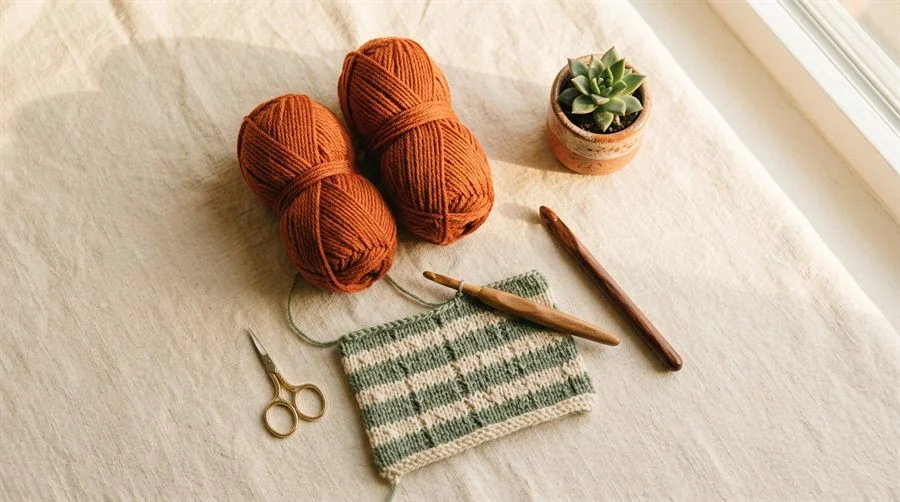
To check your gauge, you need to crochet a “gauge swatch.”
- Read the gauge section in your pattern (e.g., “14 dc and 8 rows = 4 inches”).
- Crochet a square that is slightly larger than 4×4 inches using the stitch requested. So, chain about 20, and crochet 10 rows of double crochet.
- Take a hard ruler or a gauge measuring tool (do not use a soft measuring tape, as they can stretch).
- Count exactly how many stitches fit horizontally within 4 inches.
- Count exactly how many rows fit vertically within 4 inches.
How to Fix Your Gauge
Everyone crochets with different tension. If your numbers don’t match the pattern, don’t panic—just change your hook!
- If you have more stitches in 4 inches than the pattern requires, you are crocheting too tightly. Use a larger hook size.
- If you have fewer stitches in 4 inches than the pattern requires, you are crocheting too loosely. Use a smaller hook size.